
Powered By


I am not on any more advanced treatments. I take 300mg pregabalin twice a day and 1,000mg Tylenol twice a day. I wonder if I should ask my rheumy to add other meds. I used to be on Celebrex for years until my blood work showed kidneys were being affected.
Oh! And I get routine steroid injections into lumbar spine, SI joints and trochanter (hip) joints.
@ElaineJosephStewart. Hi Elaine, now I found your question for me😄. I will tell you how i do it, and find you a link to more...
1.) Lie on your back comfortably. Place a hand on your abdomen. Take a slow deep breath in through your nose as far as you can counting how many seconds until you max out your intake. Focus on expanding your abdomen into the hand you rested on top of it. Notice how many seconds it takes to max out. It might only be one in the beginning. That is fine. Note, it might be a bit painful, even a sharp pain. This is the inflammation in the cartilage around your ribcage. It's uncomfortable, but won't hurt you so dont worry over it.
2.) Hold your breath if you can further same amount of time as you took to inhale. If you can't hold it even for that long dont worry, just try again next time. Eventually you'll get your ribcage strong enough that you can. Don't give up. Try again the next day. The key is consistency.
3.) Slowly exhale through your opened mouth, try to exhale at least as long as your inhale was. Control the exhale. Eventually try to work your exhale to take longer than your inhale. Notice your abdomen sink in towards your spine slowly as your exhale. Your ultimate eventual goal is twice as long as your inhale, maybe even longer. Again, the key is consistency.
Try to do at least 10 repetitions per day. Two or three times a day is fantastic but admittedly I only get one set in. It took a year or more of doing this, now I've been doing it for a few years. It was very hard, and uncomfortable even painful in the beginning. Now I can inhale for 8 to 10 seconds, hold for 10 and exhale for 30. Doing this restored my ability to hold a conversation and project my voice over background noise. When I slack off and forget to do this exercise, my vocal abilities reveal it. It works.
I hope it helps you. Here is an attachment for an online source. You can find more with a Google search, "diaphragmatic breathing exercises " Yours in better health P 😌 🙏
https://my.clevelandclinic.org/health/articles/...

I have very shallow breathing. Is there a website to teach me how to do the breathing you do. I had a doctor 30 years ago that was helping me with depression and gave me a breathing method and it really helped me. Of course I can't find any of my notes on it. I assume he is long gone. He was a wonderful person and doctor. I know I counted in the method he taught.
Deep diaphragmatic breathing exercises 10 repetitions 3 times a day. After about a year you will have the restriction released. Note that this will likely cause a sharp pain in the beginning. This is normal. Stick with it going slow and gentle. In the beginning you might only be able to inhale deeply for a count of one to 2 seconds, exhale might be only for 2 to 4 seconds, maybe even less depending on your restriction. This will improve in time, months maybe, with regularly doing them. Im up to a 10 second inhale, hold for 10 and a 30 second exhale. It took 2 years to get there after being told portable oxygen was in my near future. No more oxygen recommendation now. Also, make sure you have your thoracic spine fully extended and chest expanded as much as possible side to side when you are sitting in your favorite relaxing chair. Most people at rest tend to have their chest slumped down and shoulders curved inward while relaxing watching TV or on their phones or other devices. This exacerbates that restrictive costochondroitis. Yours in better health P 😌 🙏

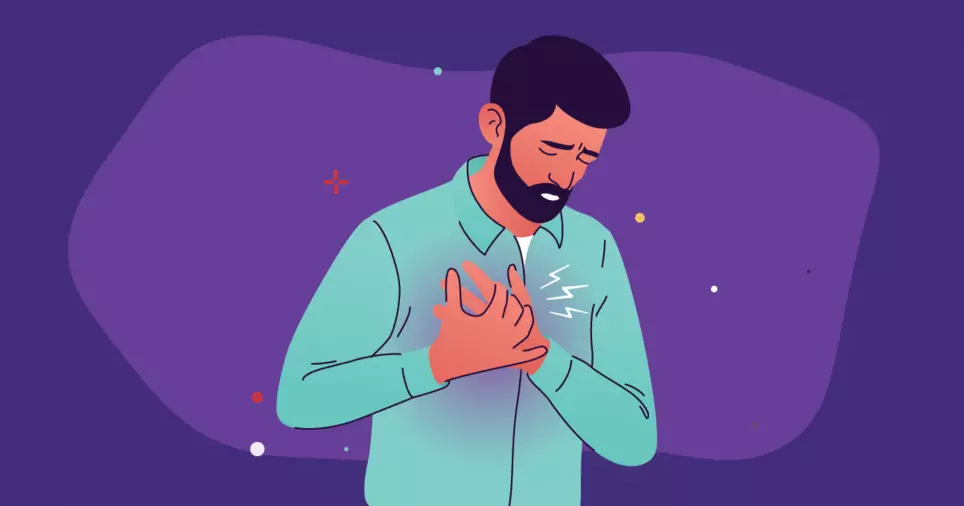
Has anyone experienced chest restriction and tenderness that makes it hard to expand fully?
Yes, many MySpondylitisTeam members have described similar experiences. This chest tenderness and difficulty expanding is often caused by costochondritis, which is inflammation of the cartilage connecting your ribs to your Show Full Answer



 Continue with Facebook
Continue with Email
Continue with Facebook
Continue with Email

 Join
Join





 Your Privacy Choices